What you need to know
- Google is putting the spotlight on how Chromebooks are making school way more accessible, especially for students with disabilities.
- ChromeVox will soon turn audio captions into braille when connected to a braille display.
- Natural-sounding “read aloud” voices are now built right in Chrome's Reading Mode, which is great news for students with dyslexia or reading struggles.
Google is spotlighting howChromebooksare helping students with disabilities thrive in observance of the Global Accessibility Awareness Day.
In ablog post, Tricia Davis-Muffett, a senior director at Google for Education, shared how Google's approach to accessibility on Chromebooks is making education more inclusive.
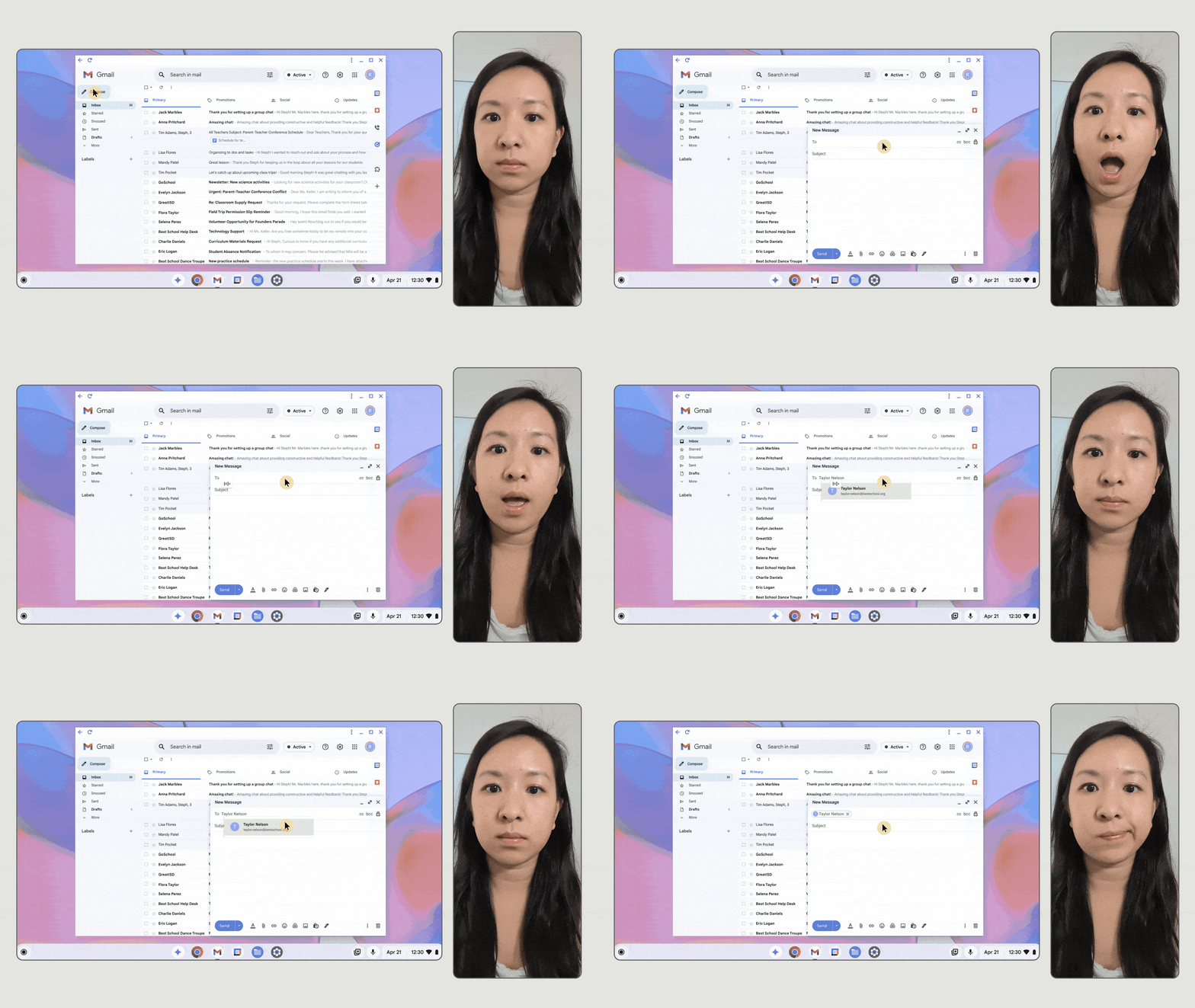
Some students can’t use a mouse or keyboard easily, Davis-Muffett noted. This is where Chromebook's Face Control steps in, literally letting students navigate their devices with facial gestures such as head tilts and eyebrow raises instead of mouse clicks.
Googlerolled out this feature in January with ChromeOS 132, and it’s based on Android’s Project Gameface.
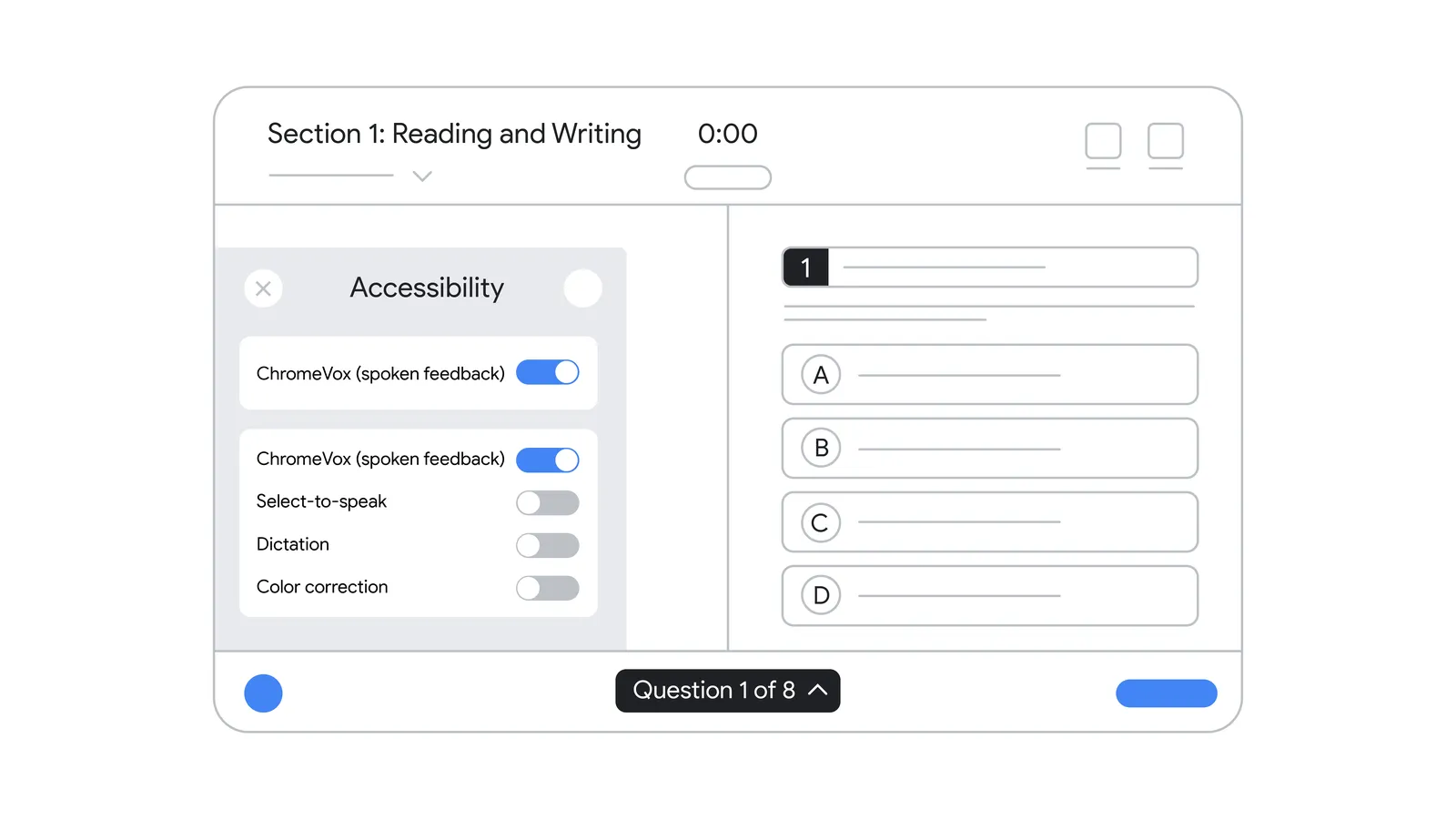
On top of this feature, the tech giant announced today that ChromeVox, the built-in screen reader for Chromebooks, is getting a nifty upgrade. Soon, when connected to a braille display, it’ll convert audio captions into braille.
>>>AA-PBQN4TR Battery for Samsung Galaxy Chromebook 2 XE530Q
Braille gets a boost
That means students with visual impairments can independently read what’s on screen without waiting for anyone else to catch them up.
ChromeVox, Google's built-in screen reader, was introduced in Chrome OS version 56.

請先 登入 以發表留言。